Paper-Based Packaging Trends for Smarter B2B Buying
Paper-based packaging is no longer limited to simple dry goods. Today, global buyers are asking a more practical question: Can paper packaging deliver the protection, compliance confidence, and business value that modern brands need?
The answer is increasingly yes. But only when the packaging is engineered correctly.
For procurement teams in Europe and North America, this shift matters. It changes how brands evaluate grease resistance, moisture control, structural stability, recyclability, and supplier reliability. It also changes what buyers expect from a packaging partner. Buyers do not want vague sustainability language. They want clear material logic, dependable production, and documentation that supports internal approval.
Why Paper-Based Packaging Is Gaining More Attention
For many years, paper packaging was often viewed as the sustainable option with performance limits. It worked well for cartons, shopping bags, and rigid boxes, but it was considered less suitable for formats involving oil, liquid contact, or humid supply chains.
That perception is changing.
New developments in the paper packaging sector show that brands are no longer looking at paper only as a “green substitute.” They are starting to view it as a high-potential packaging system that can balance branding, function, and compliance more effectively than before.
This matters because procurement decisions are no longer based on cost alone. Buyers now need packaging that can support:
- Product protection
- Retail presentation
- Supply chain efficiency
- Regulatory alignment
- Internal sustainability reporting
If a package looks eco-friendly but fails in transport, it is not a smart solution. If it is recyclable in theory but difficult to approve internally, it is not buyer-friendly. And if it protects the product but creates sourcing or compliance uncertainty, it will not survive long-term procurement review.
What B2B Buyers Now Expect from Paper Packaging
For serious B2B buyers, sustainability is only the starting point. The real buying decision usually comes down to five questions.
1. Will it protect the product in real shipping and storage conditions?
Buyers want to know whether paper packaging can handle oil exposure, friction, pressure, humidity, and long-distance logistics without failure.
2. Can it be produced consistently at scale?
A good-looking sample is not enough. Procurement teams want packaging that can move from prototype to mass production with repeatable quality and predictable output.
3. Does it support compliance conversations more easily?
Paper-based packaging is receiving more attention because it can help brands simplify conversations around recyclability, material selection, and future packaging requirements.
4. Can the supplier provide documentation clearly?
Today’s buyers often need more than the package itself. They may also need material declarations, FSC-related documentation, and sourcing clarity for internal review, retailer approval, or audit preparation.
5. Does the packaging improve total business value?
The best packaging solution is not always the cheapest unit price. Buyers also look at shipping efficiency, damage reduction, shelf impact, and long-term compliance risk.
Three Paper-Based Packaging Trends Buyers Should Watch
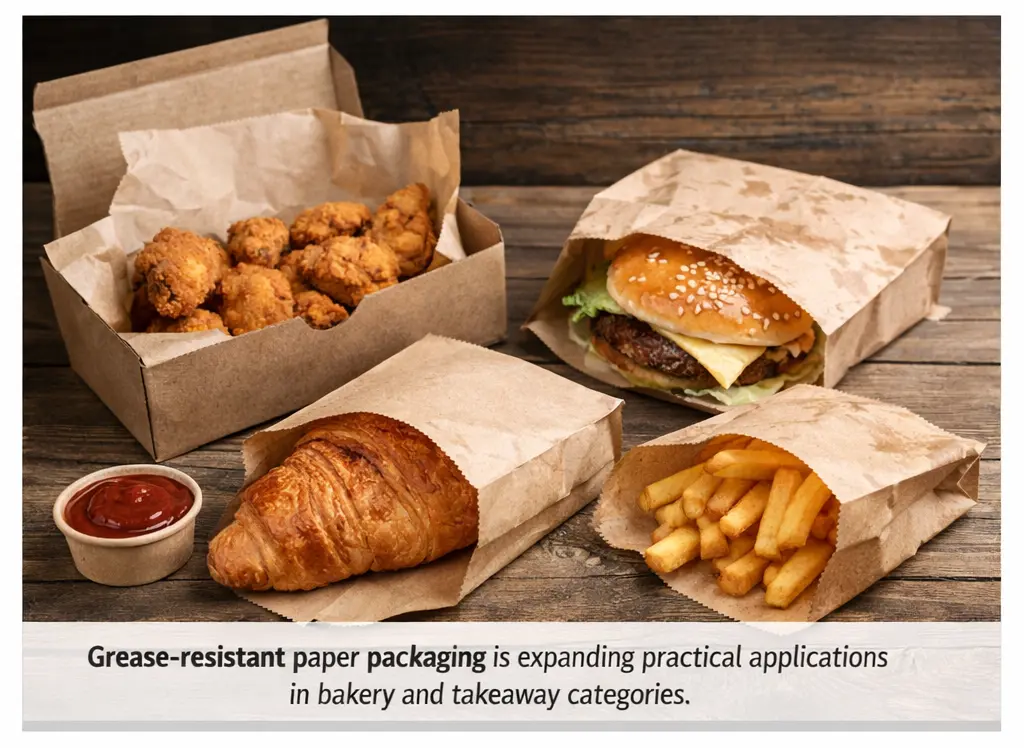
1) Grease-resistant paper packaging is becoming more practical
One of the biggest historical challenges for paper packaging has been grease resistance. In food-related and high-contact applications, buyers have long worried that paper would not deliver stable barrier performance.
That is now changing.
New material systems are helping fiber-based packaging perform better in categories where buyers once assumed plastic-heavy formats were the only safe option. For procurement teams, the lesson is simple: do not ask only whether paper can replace plastic. Ask whether the full packaging system works together, including the substrate, barrier layer, sealing method, and intended end-of-life pathway.
This is especially relevant for brands working in bakery, takeaway, confectionery, personal care, and selected premium retail categories. In the right format, paper packaging can now support a much more balanced mix of protection, presentation, and recoverability.
2) Lightweight fiber formats are changing logistics thinking
Buyers are also paying more attention to the relationship between packaging structure and freight performance.
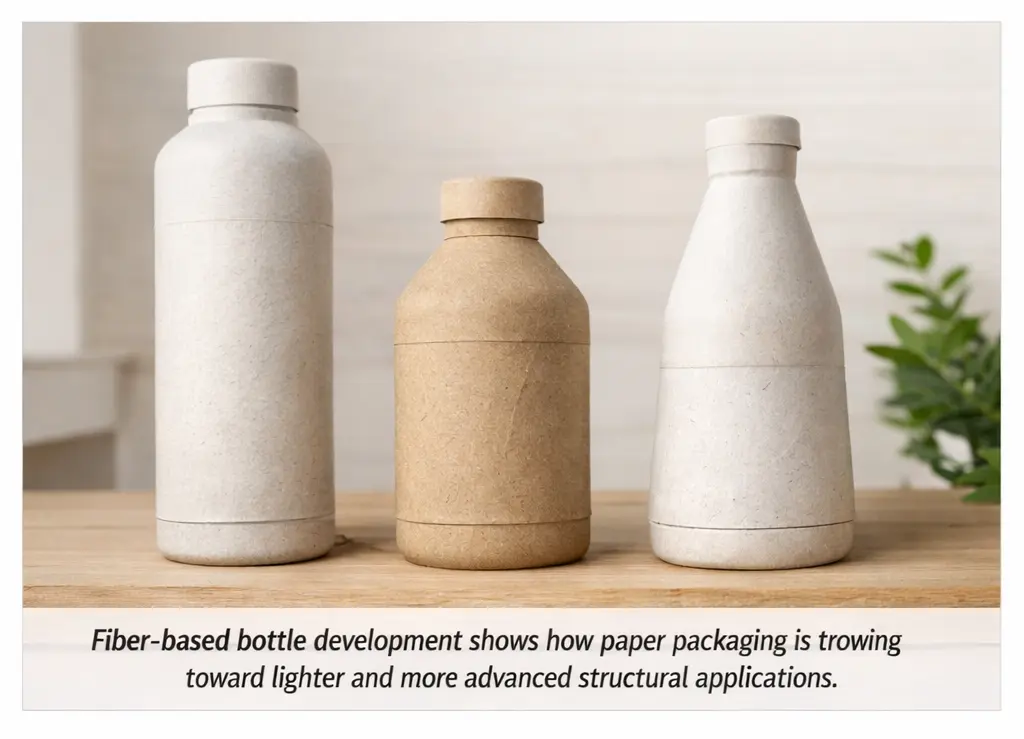
Lighter fiber-based formats can help reduce shipping weight, improve pallet use, and support more efficient storage. That does not mean every liquid or high-barrier product should immediately move into paper. It means procurement teams are now evaluating packaging with a wider lens.
They are asking:
- Can this structure reduce transport load?
- Can it improve cube efficiency?
- Can it lower damage risk?
- Can it support sustainability goals without hurting product performance?
This is where paper-based packaging becomes more than a material trend. It becomes a commercial strategy.
3) Moisture control is expanding the role of paper
Humidity has always been one of the main reasons buyers hesitate when considering paper packaging.
That hesitation is understandable. A paper structure that works in one region may not perform the same way in a humid warehouse, a rainy transport route, or a long international shipping cycle.
But the market is moving forward. Better design thinking, more advanced material combinations, and more application-specific engineering are helping paper-based packaging enter product categories that once seemed too risky.
For buyers, this changes the conversation. The better question is no longer “Can paper do this at all?” The better question is “Under what exact conditions can paper do this reliably?”
What This Means for EU and US Procurement Teams
For European and North American buyers, paper-based packaging is becoming more attractive because it fits multiple business needs at the same time.
It can support a stronger sustainability narrative. It can simplify some compliance discussions. It can improve consumer perception. And when engineered correctly, it can perform in more demanding applications than many buyers expected.
However, the supplier still matters.
The strongest packaging partners will be the ones that can connect materials, structure, production logic, and documentation into one reliable process. Buyers do not want a supplier that only talks about trends. They want a partner that understands how packaging decisions affect procurement, quality, operations, and brand teams together.
At Starmi Packaging, we approach this shift through a manufacturing lens. Our focus is not just on appearance. It is on helping buyers balance function, sourcing clarity, premium presentation, and production feasibility.
Final Takeaway
Paper-based packaging is entering a more mature stage.
The conversation is no longer about replacing plastic in theory. It is about identifying where fiber-based packaging can now deliver real technical value, real procurement value, and real brand value.
For buyers sourcing in the EU and US, the strongest opportunities are usually found where performance, recyclability, and presentation can be aligned in one packaging system.
That is why paper-based packaging deserves a closer look in 2026 — not as a trend headline, but as a smarter B2B buying strategy.
About the Author
The Starmi Engineering Team is a specialized group of packaging professionals focused on helping global B2B buyers evaluate custom paper packaging from the perspective of structure, production feasibility, and compliance readiness. We translate complex packaging requirements into practical manufacturing solutions for brands sourcing across Europe and North America. Connect with us on LinkedIn for more technical insights and packaging updates.

 English

